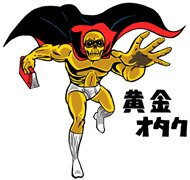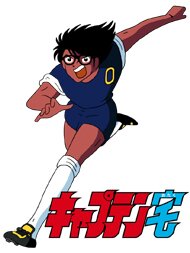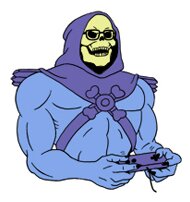

So, what if the cartoons were real… Check out this video clip from Smosh.com showing how the world would be like if it was real.
Source: Smosh.com
http://american-otaku.com/2010/08/if-cartoons-were-real

| S | M | T | W | T | F | S |
|---|---|---|---|---|---|---|
| « Aug | ||||||
| 1 | 2 | 3 | 4 | |||
| 5 | 6 | 7 | 8 | 9 | 10 | 11 |
| 12 | 13 | 14 | 15 | 16 | 17 | 18 |
| 19 | 20 | 21 | 22 | 23 | 24 | 25 |
| 26 | 27 | 28 | 29 | 30 | ||
So, what if the cartoons were real… Check out this video clip from Smosh.com showing how the world would be like if it was real.
Source: Smosh.com
http://american-otaku.com/2010/08/if-cartoons-were-real
Do you know who the Great Saiya-man is? Well, it really doesn’t matter whether you know it or not. Check it out this video clip. The best part is the Blonde chick
http://american-otaku.com/2010/07/great-saiya-man-and-the-blonde-chick
My friend forwarded me this cool Dragon Ball video clip performed by amateur actors. The film is rendered by Funglisoft, a production group based in France. I briefly checked out their website (www.funglisoft.net) and was impressed by their geek references and video collections. If you are a geek like myself, it’s worth stopping by. Oh, and here’s the video clip:
http://american-otaku.com/2010/07/gohan-vs-cyborg-17-18-real-life
Bento box is a traditional Japanese lunch box. Of course, if it’s Japanese then it has to be cute
Check out this video clip and learn how to “anime” your lunch box.
Source: watashi to tokyo
Seriously, this is super cool. The animation is directed and music created by Kousuke Sugimoto and Takayuki Manabe, respectively. Blown away for sure…
Source: Topless Robot
Sky is the limit… but apparently not for Hello Kitty. Taiwan’s EVA Airways designed two of their aircrafts based on Hello Kitty. Yes, how cute is that… haha, meow meow.


Source: Buzzfeed
I suck in math, but apparently there is somebody worse than me. Matthew didn’t know the answer to Problem #1, so instead he doodles Charizard and Blastoise. Gotta catch them all? Sorry, can’t think of a good punchline for this hopeless situation.

Source: Geekologie
Kinniku (Muscle) Man is without doubt the most popular wrestling comics in Japan. This comic series was published in the reputable Weekly Shonen Jump from 1979-1987, and it’s sequel, Kinniku Man Nisei, is currently appearing on Japan’s Weekly Playboy. Kinniku Man is a parody, action, and drama all condensed in a form of wrestling. However, what I remember most about this comic is the awesome wrestling moves especially Kinniku Man‘s trademark action, the “Kinniku Buster!”

Kinniku Buster is Kinniku Man‘s most popular attack and one of the 48 Killer Moves. It was first used during the fight with Warsman. He places an opponent’s neck on his shoulder and grabs their thighs. He then jumps up and lands in a sit-out position, causing damage to the neck, spine, and groin.
Kinniku Buster is not a comical move anymore. There are wrestlers performing this very move on the ring.


Reference: Wikia, Wikipedia, Miyatasan, K2K Time, Tsujicco Online
One of my favorite Hayao Mizaki’s film is Castle in the Sky (“Tenku no Shiro Laputa” in Japanese). The impact of the film’s drama, the action, and visuals is just awesome, and still lingers in my head. Anyways, it’s a must see!… unless it ends like this. Here’s an alternative ending created by a loving fan, and it’s really funny. Check it out (the video clip is in Japanese).
How do you resolve differences when you get in a fight? Most of the time a simple apology will suffice. And sometimes it requires a bit more than that… check out how anime fans solve their arguments.
thanx to my homie, PH, for suggesting me this video clip.
Doraemon is one the most celebrated and loved cartoon character in Japan. This Japanese manga series was created by Fujiko F. Fujio in 1969 and was made into an anime series in 1973. So far, Doraemon’s popularity shows no signs of dimishing. In March 2008, Doraemon was appointed by the Japanese Foreign Ministry of tourism as the “anime ambassador.” (Please read our previous blog entry “More Manga Characters to Join the Government“). A lot about Doraemon is already known and is even considered as common sense. Everybody knows how his fear for mice turned him blue from yellow (literally), how his feet are actually hovering and not touching the ground, and that his favorite food is Dorayaki. But, did you know there is a mysterious association with him and the number 129.3?

Date of manufacture: September 3, 2112 (12/9/3)
Height: 129.3 cm
Weight: 129.3 kg
Width of his chest: 129.3 cm
Length of his leg: 129.3 mm
Maximum power output: 129.3 bhp
Maximum height he can jump when he sees a mouse: 129.3 m
Maximum speed at which he runs away from a mouse: 129.3 km/h
The number 129.3 is from the average height (in centimeters) of Japanese children in the 4th grade in 1969. This is significant for two reasons. First, 1969 is the year Doraemon was created by Mr. Fujiko. Second, and perhaps more imporantly, Nobita first met Doraemon when he was in the 4th grade (hence the significance of the height of the average 4th grader). Nobita is Sewashi’s (Doraemon’s owner) great-great-grandfather. This is because Doraemon was sent from the future to help Nobita improve his life so that he could enjoy a better future. Mr. Fujiko wanted to create a close friendship between Nobita and Doraemon, so he chose Doraemon’s height (and the number 129.3 for other specifications) to give them many things to relate to.

Reference: Wikipedia
So, here’s my very first animation I made using Adobe Photoshop and Image Ready. Check it out yo!
*animation is in .gif format. May not be viewable depending on your browser or viewing application.

btw, the Doraemon bread was really good!
In one of our previous blog entries, we wrote about “Hello Kitty” being elected as the ambassador of tourism to represent Japan in Hong Kong and China (check out our blog entry “Hello Kitty, the ambassador“). This bold move paved the way for other manga characters to participate in the Japanese government. Please welcome Japanese ambassadors: Doraemon and Astroboy!!!
Foreign Minister Masahiko Komura appointed Doraemon, the “ambassador of anime,” and told him, “Doraemon, I hope you will travel around the world as an anime ambassador to deepen people’s understanding of Japan so they will become friends with Japan.” Doraemon, through voice actress Wasabi Mizuta, replied “through my cartoons, I hope to convey to people abroad what ordinary Japanese people think, our lifestyles and what kind of future we want to build.”
Astro Boy, another cartoon icon, was named in November as the ambassador of overseas safety.
SOURCE: MNBC
“On the evening of 16 December 1997 approximately 700 people around the nation (mostly children) were rushed to hospitals and treated for seizure symptoms. The youngsters had been watching the vastly popular TV animated cartoon series Pocket Monsters (Pokemon).” Pocket Monster incident and low luminance visual stimuli: special reference to deep red flicker stimulation. Acta Paediatr Jpn. 1998 Dec;40(6):631-7.
We all heard about the Pokemon Seizure incident, but what is the scientific evidence behind it? I searched for “pokemon seizure” on PubMed, a searchable online database of articles from medical journals maintained by The National Library of Medicine, and came up with few interesting articles. I’ll summarize a few of their findings in chronological order.
[1998] Initial reports accused the low luminance, 12 Hz alternating red/blue stimulus as the cause of the Pokemon incident. Early studies considered the possibility that some healthy youngsters may have latent photosensitivity and such a sensitivity might be disclosed by use of low luminance deep red flicker stimulation. Pocket Monster incident and low luminance visual stimuli: special reference to deep red flicker stimulation. Acta Paediatr Jpn. 1998 Dec;40(6):631-7.
[2001] Further studies were done on the role of long-wavelength red light emission from TV in the induction of photosensitive seizures by an animated TV program called “Pokemon”. Conclusion: High amounts of long-wavelength red light emitted from CRTs might play an important role in induction of photosensitive seizures in “Pokemon” incident. However, the small sample number (n=11) makes this conclusion slightly weak, but does bring up the “possibility” of the association with red light emission induced seizure. Long-wavelength red light emission from TV and photosensitive siezures. Acta Neurol Scand. 2001 Feb;103(2):114-9
[2001] However, despite the mounting scientific evidence, others claim that the photo-induced seizure alone cannot account for the breadth and pattern of the events. “The characteristic features of the episode are consistent with the diagnosis of epidemic hysteria, triggered by sudden anxiety after dramatic mass media reports describing a relatively small number of genuine photosensitive-epilepsy seizures.” Pokémon contagion: photosensitive epilepsy or mass psychogenic illness? South Med J. 2001 Feb;94(2):197-204.
[2002] Many studies characterized the hospitzlied children to determine the risk factors to photo-induced seizure. Higher incidence of induced-seizure were found in children who (1) concentrated in watching the show, (2) watching it in short distance, (3) watched in a lowly lit room, and (4) had familial history of seizure. A comparison survey of seizures and other symptoms of Pokemon phenomenon. Pediatr Neurol. 2002 Nov;27(5):350-5.
[2008] General risk factors and association with photo-induced seizure. The overall prevalence of the photoparoxysmal response (PPR) among patients requiring an EEG is approximately 0.8%, but 1.7% in children and 8.87% in patients with epilepsy, more often in Caucasians and females. Autosomal dominant inheritance is indicated, and this response is seen especially at the wavelength of 700 nm or at the flicker frequency of 15-18 Hz. The PPR extending beyond the stimulus carries no increased risk of seizures. Prognosis is generally good, especially after 20 years of age. Attention to PPR has been increased with the advent of video games, and the evoked seizures from these games are likely a manifestation of photosensitive epilepsy. Drug therapy has emphasized valproic acid, but Levetiracetam has also been successful in eliminating the PPR. The photoparoxysmal response: the probable cause of attacks during video games. Clin EEG Neurosci. 2008 Jan;39(1):1-7.
You know who the real victim of all this is? Your friend who has to drag you to the hospital after finding out that you watched Pokemon that evening.
Pikachu doesn’t seem so cute now does he?
Powered by WordPress with ComicPress |Subscribe: RSS |Back to Top ↑